Summarize and analyze this article with:
Chit fund or personal loan: which option is right for your financial needs? Understand how they work, compare costs, repayment obligations, benefits and risks, and explore how digital chitty offers a different approach to planned access to funds.
When an unexpected expense or a major financial goal comes up, many people consider borrowing money through a personal loan. But borrowing is not the only financial arrangement people explore. In Kerala and other parts of India, chit funds have also been used as a way to save collectively and access a pooled amount according to agreed scheme rules.
With the growth of digital financial services, more people are now discovering online chitty and digital chit fund platforms.
So, what is the difference between a chit fund and a personal loan? Is a chit fund the same as borrowing? Which option may suit your financial situation?
This guide explains how both arrangements work, compares their costs and obligations, and highlights what you should understand before making a decision.
What Is a Chit Fund?
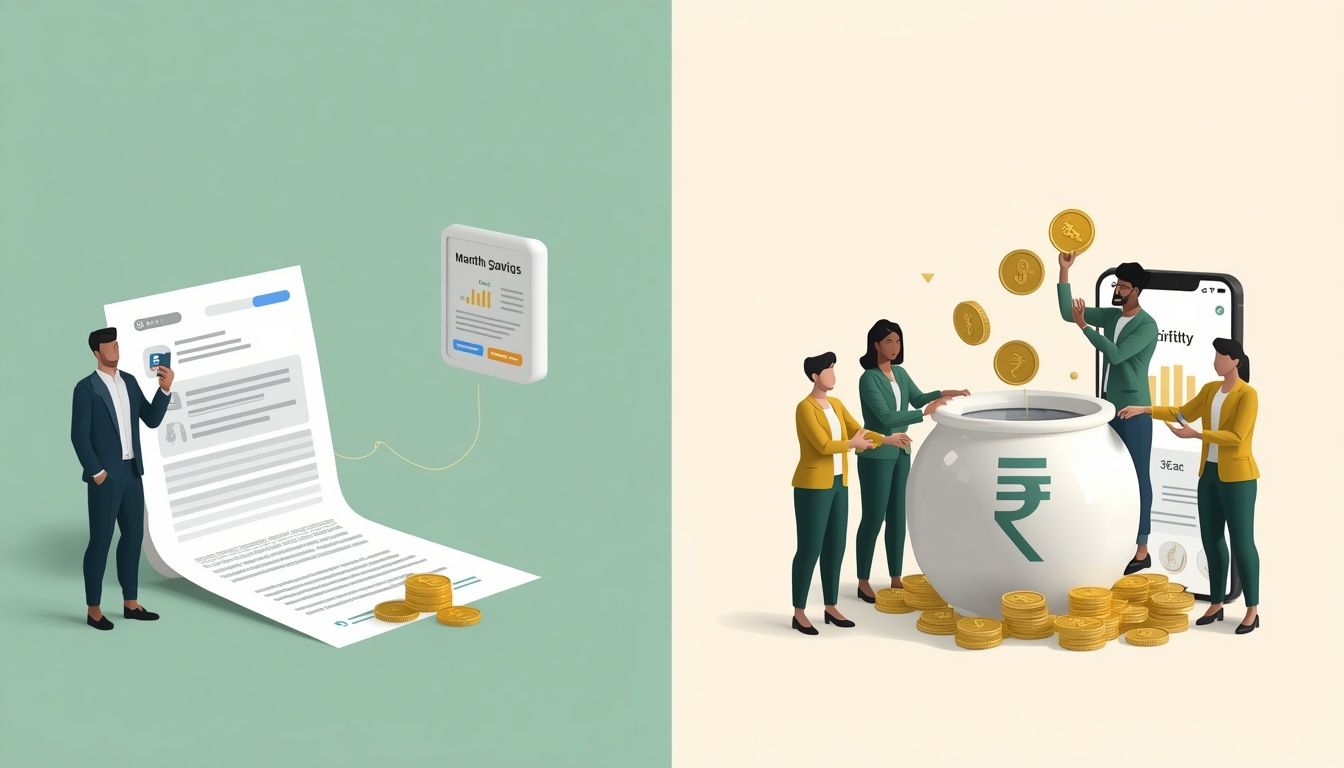
A chit fund, also known as a chitty in Kerala, is a collective financial arrangement in which a group of subscribers contributes an agreed amount at regular intervals for a fixed period.
The pooled contribution is allocated to one subscriber during each cycle according to the scheme's agreed process. Depending on the arrangement, allocation may involve an auction, bidding or another permitted method.
A subscriber who receives the pooled amount may still need to continue paying instalments for the remaining period.
A chit fund is not a conventional bank deposit, personal loan or guaranteed-return investment. Its terms, deductions, payout mechanism and risks depend on the scheme.
What Is a Personal Loan?
A personal loan is money borrowed from a bank or other lender. The borrower receives an approved loan amount and agrees to repay it over a specified period, usually through monthly instalments called EMIs.
The lender generally charges interest and may also apply processing fees and other charges.
Personal loans are often unsecured, meaning the borrower may not need to provide collateral. However, approval depends on the lender's eligibility criteria, income assessment, credit profile and other factors.
Unlike a chit fund, a personal loan creates a direct borrowing relationship between the lender and the borrower.
Chit Fund vs Personal Loan: Key Differences
The main difference is that a chit fund is a collective contribution arrangement, while a personal loan is a borrowing agreement.
The two arrangements serve different purposes. A chit fund should not be described as a loan without interest, and a personal loan should not be described as a savings scheme.
6 Important Differences You Should Understand
1. Saving Together vs Borrowing Money
In a chit fund, subscribers contribute to a shared pool. The pooled amount is allocated according to the agreed scheme process.
In a personal loan, a lender provides money to a borrower, who must repay the amount along with applicable interest and charges.
This is the fundamental difference between collective participation and borrowing.
2. How You Access Money
With a personal loan, the borrower applies to a lender. If approved, the lender disburses the loan amount under the loan agreement.
With a chit fund, subscribers participate in a group arrangement. A participant receives the pooled amount when selected or allocated under the scheme rules.
The timing of a chit payout may not be entirely under the participant's control.
3. Interest vs Chit Discount and Charges
Personal loans generally involve interest. The total repayment depends on the principal, interest rate, tenure and fees.
A chit fund uses a different financial structure. The amount available for distribution can be affected by the discount or bidding process, foreman commission and other deductions permitted under the agreement.
Therefore, do not compare a chit fund and a personal loan simply by assuming one has zero cost. Review the actual amount payable and amount receivable.
4. Monthly Financial Commitments
A personal loan requires the borrower to make EMI payments according to the repayment schedule.
A chit subscriber has to meet the agreed instalment obligations throughout the scheme. Receiving a payout does not automatically end those obligations.
Before joining either arrangement, check whether the monthly commitment is affordable.
5. Credit Score and Eligibility
Personal loan lenders generally assess income, repayment capacity, credit history and other eligibility requirements.
Chit fund participation follows the organiser's eligibility requirements and the applicable scheme rules. This does not mean that a chit fund is automatically available to everyone or that it has no financial risks.
6. Financial Risk
A personal loan can create repayment pressure, particularly when income falls or expenses increase. Missing EMIs can also affect a borrower's credit history.
A chit fund has different risks, including organiser reliability, participant defaults, payout conditions, deductions and continuing instalment obligations.
Digital platforms can improve access to information, but they do not eliminate these risks.
When Might a Chit Fund Be Worth Exploring?
A chit fund may be worth understanding if you:
- Want to participate in a structured collective contribution arrangement.
- Can afford the regular instalments for the entire scheme duration.
- Understand how the payout and allocation process works.
- Have reviewed the organiser's credentials and applicable registration.
- Are planning a financial goal and can accommodate uncertainty around payout timing.
It is important to remember that a chit fund is not an emergency fund or a guaranteed source of immediate money.
When Might a Personal Loan Be More Appropriate?
A personal loan may be worth comparing if:
- You need a defined amount within a specific timeframe.
- You meet the lender's eligibility requirements.
- You understand the interest rate and total repayment amount.
- You have a reliable plan for paying the EMIs.
- The borrowing cost is appropriate for your financial circumstances.
Compare the annual percentage rate where available, processing fees, late-payment charges, foreclosure terms and the total amount payable before accepting a loan.
Chit Fund vs Personal Loan: Which Is Better?
There is no universal answer. The right option depends on why you need money, when you need it, your income stability and your ability to meet future payments.
A personal loan and a chit fund are not interchangeable. Make the choice based on the actual terms, not only on promotional claims.
What Is a Digital Chitty?
A digital chitty brings the traditional chit fund arrangement into an online-enabled experience.
Depending on the platform, participants may be able to explore scheme details, access contribution information, track payments and receive updates digitally.
This can make participation easier to understand and manage, especially for people who are comfortable using digital financial services.
However, digital access does not change the fundamental nature of the arrangement. The scheme still involves contributions, payout rules and contractual obligations.
How CHITTY Brings a Digital-First Approach to Chitty
CHITTY is built around making chitty easier for today's digitally connected workforce to explore.
Its positioning is centred on collective saving, digital accessibility and a different approach to planned access to funds.
Rather than presenting every financial need as a reason to borrow, CHITTY encourages people to understand how a chitty arrangement works and whether it fits their goals.
Explore how CHITTY works and visit CHITTY to learn more about its digital-first approach.
Always review the specific scheme terms, organiser information, payout conditions and obligations before participating.
What Should You Check Before Joining a Chit Fund?
Before joining any chitty, take the time to verify:
- Organiser identity: Confirm who operates the scheme.
- Registration: Check the applicable registration and legal requirements.
- Scheme amount: Understand the total chit value and your instalment.
- Duration: Confirm how long you must contribute.
- Payout rules: Understand how subscribers receive the pooled amount.
- Deductions: Check commission, discount, fees and other charges.
- Default conditions: Understand what happens if you miss an instalment.
- Agreement: Read and retain the complete written agreement.
In India, chit fund arrangements are governed by the Chit Funds Act, 1982, and applicable state rules. Verify the legal status of the specific scheme and organiser. Do not rely solely on advertisements or verbal assurances.
Final Thoughts
A chit fund and a personal loan may both be considered when someone needs access to money, but they work in very different ways.
A personal loan is borrowing that creates a repayment obligation with interest and applicable charges. A chit fund is a collective contribution arrangement with scheme-based payout rules and continuing instalment commitments.
For modern employees and families, understanding these differences is more important than choosing an option based on convenience or marketing claims.
Compare the terms, assess affordability, verify the organiser and make an informed financial decision.
Save smart. Understand your options. Access funds responsibly.
Disclaimer: This article is for general educational purposes only and does not constitute financial, investment or legal advice. Chit fund participation involves contractual obligations and risks. Personal loan terms vary by lender. Verify all applicable laws, scheme documents and loan agreements before making a decision.
Frequently Asked Questions
No. A chit fund is a collective contribution arrangement in which subscribers contribute to a common pool. A personal loan is money borrowed from a lender and repaid with applicable interest and charges.